
125s, A2 bikes and scooters on group rides: they belong, here's how to plan for them
The short answer
Riders on 125s, A2 bikes and scooters are riders, and many of them will be the core of your local scene in a few years. To include them, pick roads below motorway speeds, plan fuel stops around the smallest tank, set a relaxed pace and say clearly in the ride description that small bikes are welcome.
A lot of riders start on something small. Some stay there because a 125 or a scooter does everything they need. Either way, the rider on the small bike got up early, checked the weather and came to ride, the same as everyone else. Group rides that leave them out lose the riders who'll be hosting rides next season.
Who's riding small bikes
Learners and new riders. In many countries, a 125 is the first bike people can legally ride, sometimes on a provisional licence.
A1 and A2 licence holders. Across the EU, licences come in steps. Under the EU rules, A1 covers motorcycles up to 125cc and 11 kW. A2 covers motorcycles up to 35 kW, which includes many mid-size bikes and restricted versions of bigger ones. Minimum ages and the route to a full A licence are set within EU limits and differ from country to country, so check your national rules.
Scooter riders. Commuters, city riders and people who love scooters for their own sake. Scooter clubs have a long social history of their own, and a 125 or larger scooter can keep up on most country roads.
Experienced riders who chose light. Plenty of long time riders own a small bike because it's cheap to run, light in the city and fun on tight roads.
What changes when small bikes join
| Factor | What to plan for |
|---|---|
| Top speed | Many 125s are comfortable below motorway speeds. Prefer country roads. |
| Motorways | Learner riders are banned from motorways in some countries, including the UK. Check. |
| Fuel range | Small tanks can need more frequent stops. Ask in the chat. |
| Hills | Long, steep climbs slow small engines. Expect gaps on the way up. |
| Wind and weather | Light bikes feel crosswinds more. Be cautious on exposed roads. |
| Experience | Some riders are new. Brief clearly and avoid surprises. |
How to plan a ride that includes everyone
Say so in the description. "125s, A2 bikes and scooters welcome" removes the doubt. Many new riders don't join because they assume they'll be in the way.
Pick the riding level for the slowest bike's comfort. A Beginner or relaxed Intermediate ride on country roads works for almost everyone. Our guide to riding levels explains how to choose.
Choose roads, not motorways. Twisty roads are where small bikes are fun and big bikes have no advantage worth caring about.
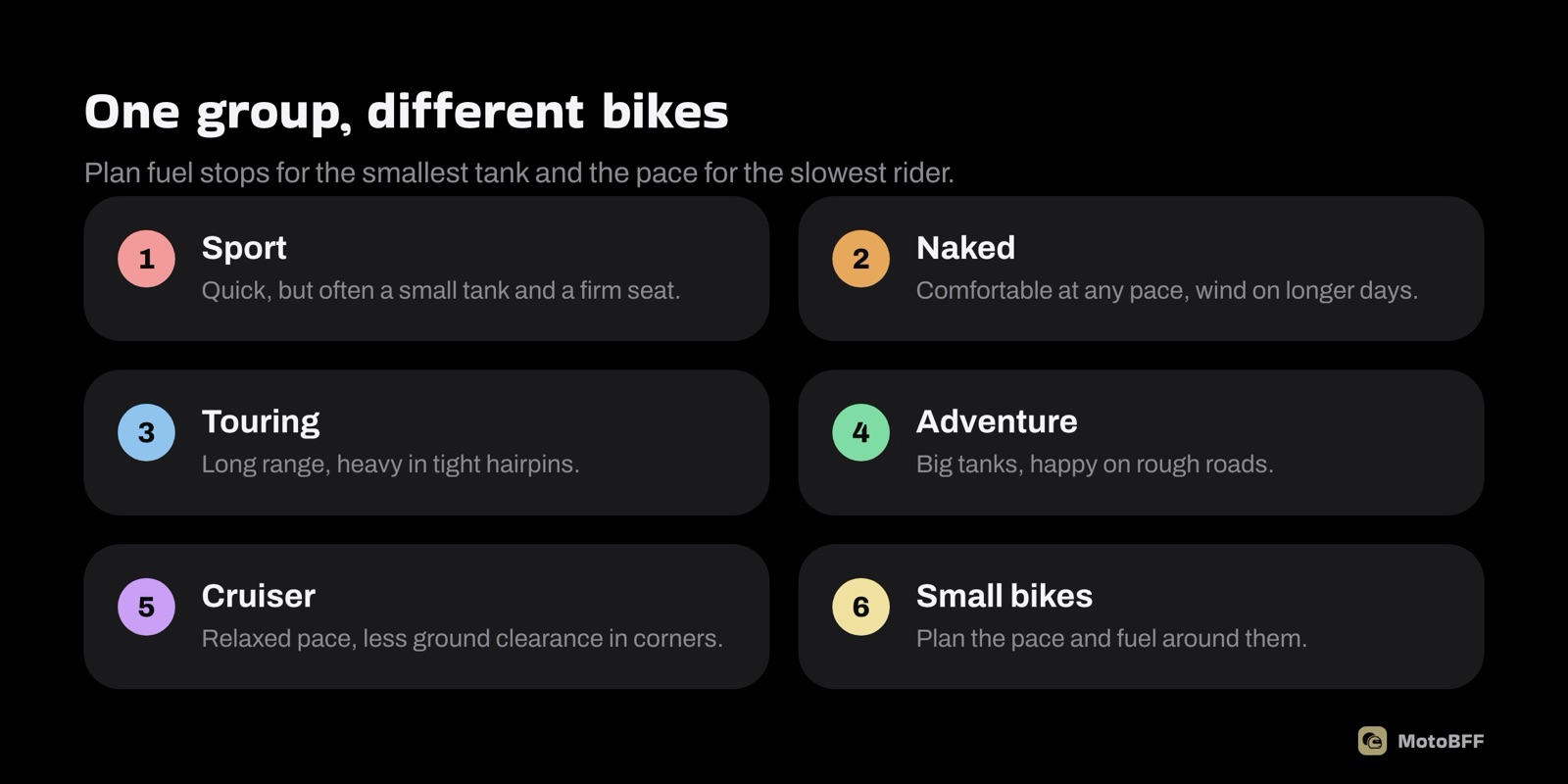
Plan fuel around the smallest tank. Ask riders to post their bike and rough range in the ride chat, then plan stops accordingly.
Shorter legs. Small bikes often have firmer seats and more vibration. Stop every hour or so.
Put small bikes near the front. The lead sets a pace the rider behind can keep. Let a small bike rider ride second and the group stays together. The mixed bikes post covers order and gaps in more detail.
Have a sweep. A calm sweep makes sure nobody is left alone after a hill or a junction.
For riders on small bikes
- Join rides that say small bikes are welcome, or ask the host in the chat before you go.
- Know your range and tell the group.
- Ride your own ride. If the group pulls away on a straight, that's fine. They'll wait at the next junction.
- Don't apologise for your bike. Nobody worth riding with cares.
On MotoBFF, every ride shows its riding level and destination before you join, and the ride chat is the place to ask the host about pace and stops. The beginner friendly group rides post has more tips for your first few rides.
Questions riders ask
Can I join a group ride on a 125?
Yes. Look for rides on country roads at a relaxed pace, or ask the host in the ride chat. Most hosts are happy to have you.
What is the difference between A1 and A2 licences?
Under the EU rules, A1 covers motorcycles up to 125cc and 11 kW, and A2 covers motorcycles up to 35 kW. Ages and progression rules vary by country.
Can scooters keep up on group rides?
Larger scooters do well on most country roads. Smaller scooters suit city rides and slower routes. Tell the host what you ride.
How should a host plan for different bikes?
Avoid motorways, plan fuel around the smallest tank, stop every hour and put the slowest bike near the front.