
Group rides with different bikes: fuel range, pace and roads
The short answer
A group ride with different bikes works when you plan fuel stops for the bike with the shortest range, set the pace for the slowest bike and rider on that road, and choose roads every bike can handle. Ask everyone their fuel range at the briefing and put smaller or lower bikes near the front.
A sport bike, a cruiser, a big touring bike and a 125 at the same café table is one of the best sights in riding. On the road, those bikes want different things. A bit of planning keeps everyone happy.
What changes from bike to bike?
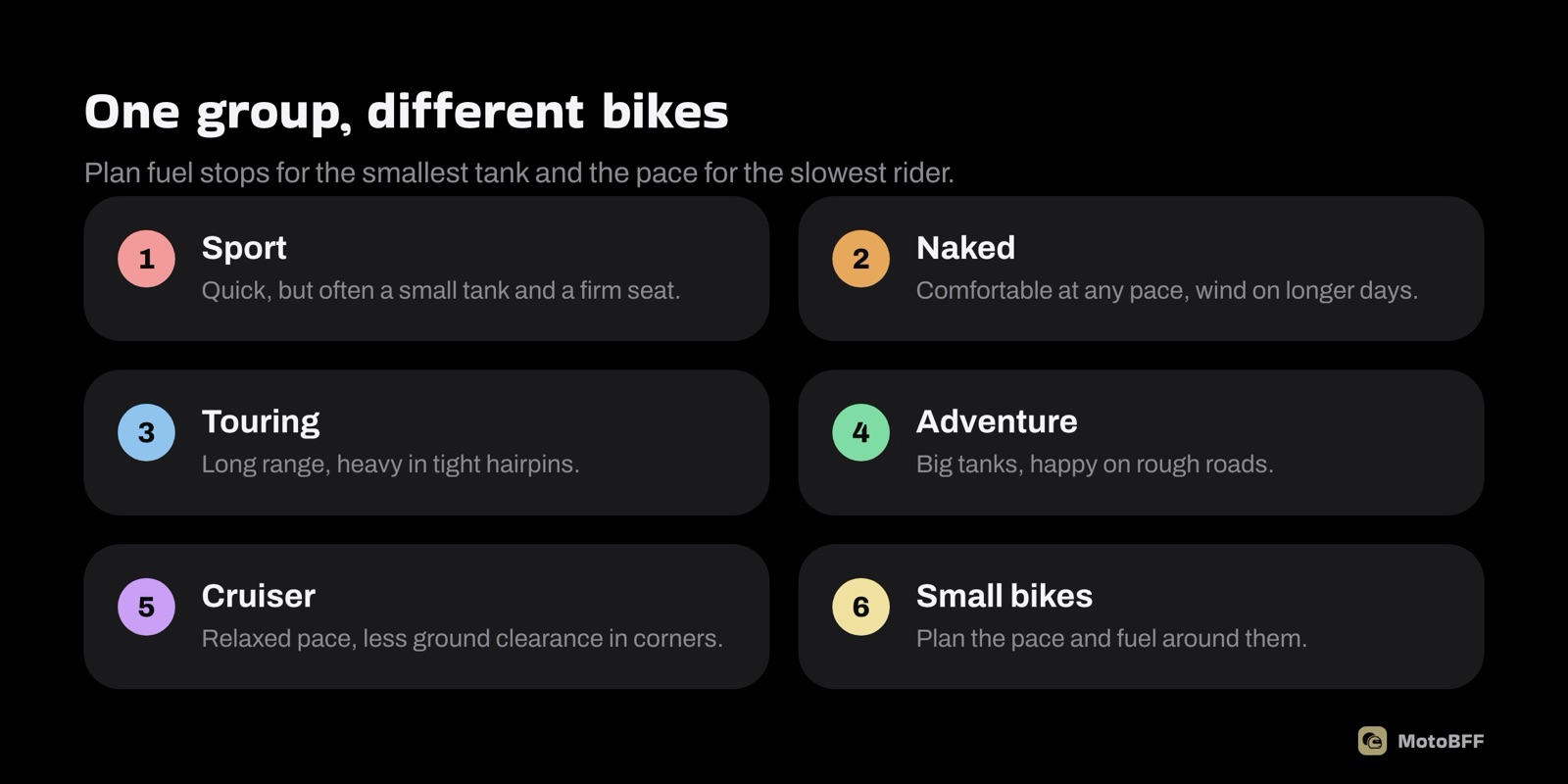
| Bike type | Fuel range | Comfortable pace | Watch out for |
|---|---|---|---|
| Sport | Often short | Quick in corners, tiring on long straights | Rider comfort on long days |
| Naked | Short to medium | Flexible | Wind on motorways |
| Touring | Long | Relaxed, steady | Weight on tight hairpins and slow turns |
| Adventure | Long | Flexible | Tall seats at stops on slopes |
| Cruiser | Often short | Relaxed, steady | Ground clearance in tight corners |
| Small (125 to 400) | Varies | Slower on motorways and climbs | Overtaking, strong wind |
These are general tendencies. A sport bike ridden gently can go a long way on a tank, and plenty of cruisers carry big tanks. Ask, don't assume.
Fuel: plan for the shortest range
Running out of fuel is the most common way a mixed group gets stuck.
- Ask at the briefing: "How far do you get before the light comes on?"
- Plan fuel stops for the shortest range, with a margin. Rural fuel stations close early and on Sundays.
- Everyone fills up together. Even if your tank is half full, top up. It saves a second stop later.
- Say the fuel plan out loud, and put it in the ride description.
- Agree the signal. Pointing at the tank means "I need fuel" in most groups. See our hand signals guide.
Pace: ride for the slowest bike on that road
Different bikes are slow in different places. A small bike is slow on a motorway climb. A cruiser is slow through tight hairpins. A heavy touring bike takes more care on a steep, slow turn.
- The lead rides for the slowest bike on each section, not for the group average.
- Regroup often, at junctions and at the top of climbs.
Roads: choose what every bike can ride
Before you post the ride, check:
- Surface. Gravel and broken tarmac are fine on an adventure bike and stressful on a sport bike with road tyres.
- Tight corners and hairpins. Long cruisers scrape footpegs; touring bikes need care at walking pace.
- Steep, slow turns and car parks on slopes. Tall riders on tall bikes manage; short riders on tall bikes find them hard.
- Long motorway stretches. Small bikes and naked bikes feel the wind.
If a section suits only some bikes, offer a split: "Adventure bikes take the gravel loop, everyone else waits at the café."
In MotoBFF, routes other riders have published come with ratings, Would ride it or Not great, and the ride description is the place to mention surface and gravel.
Where everyone rides in the group
- Smaller bikes and newer riders near the front, right behind the lead, where the pace is smoothest.
- Riders who know the road at the back with the sweep.
Formation basics still apply: staggered on straights, single file in corners, a two-second gap to the rider directly ahead. A heavy touring bike or cruiser may need a longer gap to brake.
Stops: think about comfort
Sport bikes are tiring on the wrists. Small bikes vibrate. Cruisers can be hard on the back over long distances. Stop every hour or so, longer on hot days. Make sure the café has flat parking: a tall adventure bike on a sloping gravel car park is a stressful end to a good road.
Mixed groups are good groups
Mixed groups tend to ride at a friendlier pace, because nobody can treat it as a race between identical bikes.
Questions riders ask
Can different types of motorcycles ride together in a group?
Yes. Sport, touring, adventure, cruiser and small bikes ride together well when the host plans fuel stops for the shortest range, sets the pace for the slowest bike on each section and chooses roads every bike can handle.
How do you plan fuel stops on a mixed group ride?
Ask every rider how far they get before the fuel light comes on, plan stops for the shortest range with a margin, and have everyone fill up at each stop.
Can a 125cc or small bike join a group ride?
Yes, if the route avoids long, fast motorway sections and the pace suits it. Many beginner-friendly group rides welcome small bikes. Tell the host what you ride when you join.
Where should a cruiser ride in a group with sport bikes?
Near the front, behind the lead, so the lead can set a pace through corners that suits the cruiser's ground clearance and the group stays together.