
How to ride a motorcycle in the rain
The short answer
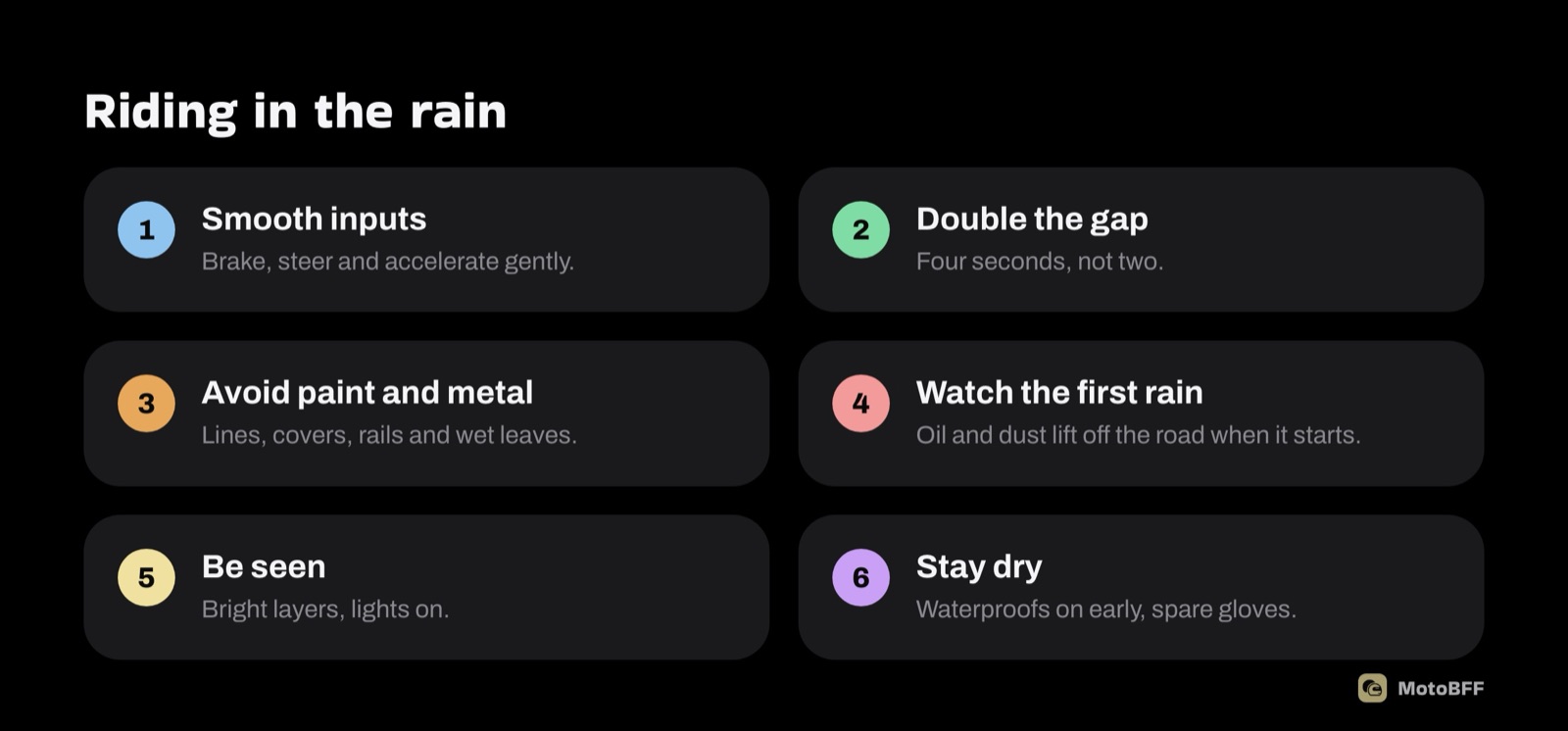
To ride a motorcycle in the rain, make every input smooth, double your following distance, brake earlier and keep off painted lines, metal covers and wet leaves. Take extra care in the first part of a shower after a dry spell, when the road is at its slipperiest, and wear waterproofs and bright gear so drivers see you.
Rain is part of riding. Tyres grip better in the wet than most riders expect, as long as you don't ask for everything at once. The skill is not speed, it's calm.
Smooth inputs
A wet road has less grip, and grip runs out fastest when you change things suddenly. So:
- Brake progressively. Squeeze the front lever, let the weight settle onto the front tyre, then add more. Use both brakes.
- Roll the throttle on and off. No snapping it open out of a corner.
- Lean a little less. Take corners slower so you need less lean, and do your braking while the bike is upright.
- Change gear gently. A clumsy downshift can lock the rear wheel for a moment.
If your bike has ABS and traction control, they help. They don't add grip that isn't there.
Double the gap
On a dry road most riders keep two seconds behind the vehicle in front. In the wet, make it at least four. Your stopping distance grows, spray hides what's ahead, and the car in front may brake hard for a puddle you can't see yet.
On a group ride, the whole formation spreads out. See group riding formation for how the gaps work.
Know the slippery surfaces
Some surfaces lose far more grip than the tarmac around them when wet:
| Surface | What to do |
|---|---|
| Painted lines, zebra crossings, arrows | Ride between them, or cross them upright |
| Manhole covers, drain grates, tram rails, bridge joints | Stay upright and off the brakes as you cross |
| Wet leaves and mud | Slow down before, avoid the patch if you can |
| Diesel or oil (a rainbow sheen) | Avoid. Common near fuel stations and roundabouts |
| The middle of the lane | Oil drips collect here. The car wheel tracks are often cleaner |
The first rain is the worst
After a dry spell, oil, rubber and dust build up on the road. The first rain lifts them into a greasy film before washing them away. The start of a shower is often more slippery than the road an hour into steady rain. Ride gently until it has had time to clear.
Standing water and aquaplaning
Deep water can lift a tyre off the road. Slow down before puddles, ride through with the bike upright and a steady throttle, and keep off the brakes in the water itself. Good tread depth matters more in the rain than any other time, so check it as part of your T-CLOCS check.
Keep your tyre pressures at the normal figures from your manual. Lowering them for the wet is an old habit that doesn't help.
Be seen
Rain, spray and fogged car windows make you harder to see. Wear something bright or reflective, keep your lights on, and position yourself where drivers can see you in their mirrors. Assume a car pulling out hasn't seen you.
Visibility from inside the helmet
- An anti-fog insert on the visor is the single best fix for fogging.
- Crack the visor open a little at low speed if it fogs.
- Clean the visor before the ride. A greasy visor smears in rain and glares at night.
Waterproofs and dry gloves
Wet and cold together drain your concentration quickly. Wear waterproof layers or an oversuit, with the trouser legs over your boots and the jacket cuffs either inside or outside your gloves, so water runs off rather than in. Carry a second pair of gloves in a sealed bag. Changing into dry gloves at a café stop makes the second half of the ride far more pleasant.
When to stop
Pull over if you can't see well, if you're shivering, or if there's lightning, especially on an exposed pass. Waiting out a storm in a café costs half an hour. If you're hosting a group ride and the forecast is bad, it's fine to move the time or cancel. Everyone in the ride chat will thank you.
Questions riders ask
Is it safe to ride a motorcycle in the rain?
Yes, with the right technique. Ride smoothly, double your following distance, brake earlier and avoid painted lines, metal covers and leaves. Good tyres and waterproof gear make a big difference.
Should I lower my tyre pressure in the rain?
No. Keep the pressures recommended in your bike's manual. Lower pressure doesn't add grip in the wet and makes the bike handle worse.
Why is the road more slippery when it first starts to rain?
Oil, rubber and dust build up on the road in dry weather. The first rain lifts them into a slippery film until enough rain falls to wash them away.
What following distance should I keep on a motorcycle in the rain?
At least four seconds, double the usual two seconds. Stopping distances are longer on wet roads and spray makes hazards harder to see.