
Returning to motorcycling after years away: a practical guide
The short answer
If you're coming back to riding after years away, check your licence is still valid, book a refresher lesson with a qualified instructor, and choose a bike that suits the rider you are now. Start with short, familiar rides, then join a Beginner group ride to rebuild confidence with others around you.
Lots of riders stop for a while: children, a move, money, a scare, a bike that was sold and never replaced. Then, ten or twenty years later, the itch comes back. Returning riders are a big part of the biker community, and most of them say the same thing: it comes back, but not all at once.
Why coming back needs a plan
Your memory of riding is from a different rider. Reactions, fitness, eyesight and flexibility change with age. Roads and traffic have changed too, with more vehicles, more distractions and more drivers looking at phones. The skills are still there, but they're rusty, and the confidence often returns faster than the skill. That gap is where returning riders get caught out.
None of that is a reason not to ride. It's a reason to ease back in.
Step 1: check your licence and paperwork
Licence rules change. Depending on where you live, your old licence may still cover the bike you want, it may need renewing, or a category you think you have may not apply to modern bikes. Some learner permits and training certificates also expire. Check with your licensing authority before you buy anything, and speak to an insurer about how your time away affects cover.
Step 2: take a refresher course
This is the single most useful thing you can do. Many riding schools offer refresher lessons for returning riders, and an instructor will spot habits you didn't know you had. Some countries also have structured options:
- In the UK, BikeSafe workshops are run by police forces, and organisations such as IAM RoadSmart and RoSPA offer advanced rider training.
- In the US, the Motorcycle Safety Foundation's courses are offered through many training providers and states.
- Elsewhere, ask riding schools, national motorcycling federations or road safety organisations what's available.
Even one session in a car park, practising slow control, emergency stops and swerves, makes a real difference.
Step 3: get to know modern bikes
Bikes have moved on. A modern machine may feel very different from the one you remember.
| What's new | What it means for you |
|---|---|
| ABS | Common on most new bikes, and required on new bikes over 125cc in the EU. Brake firmly without locking the wheels. |
| Traction control | Limits rear wheel spin when accelerating, especially in the wet. |
| Ride modes | Change power delivery and electronics for rain, road or sport. |
| Fuel injection | Starts easily, no choke, smoother response. |
| LED lights | Brighter, more visible. |
| Better tyres | More grip, but they still need time to warm up. |
Electronics help, but they don't replace skill or good judgement. Learn what your bike has and how it behaves before you rely on it.
Choosing a bike: resist buying the bike you wanted at 25. Something lighter and more manageable will rebuild your skills faster, and you can always move up. Sit on a few at a dealer, and test ride if you can.
Step 4: upgrade your gear
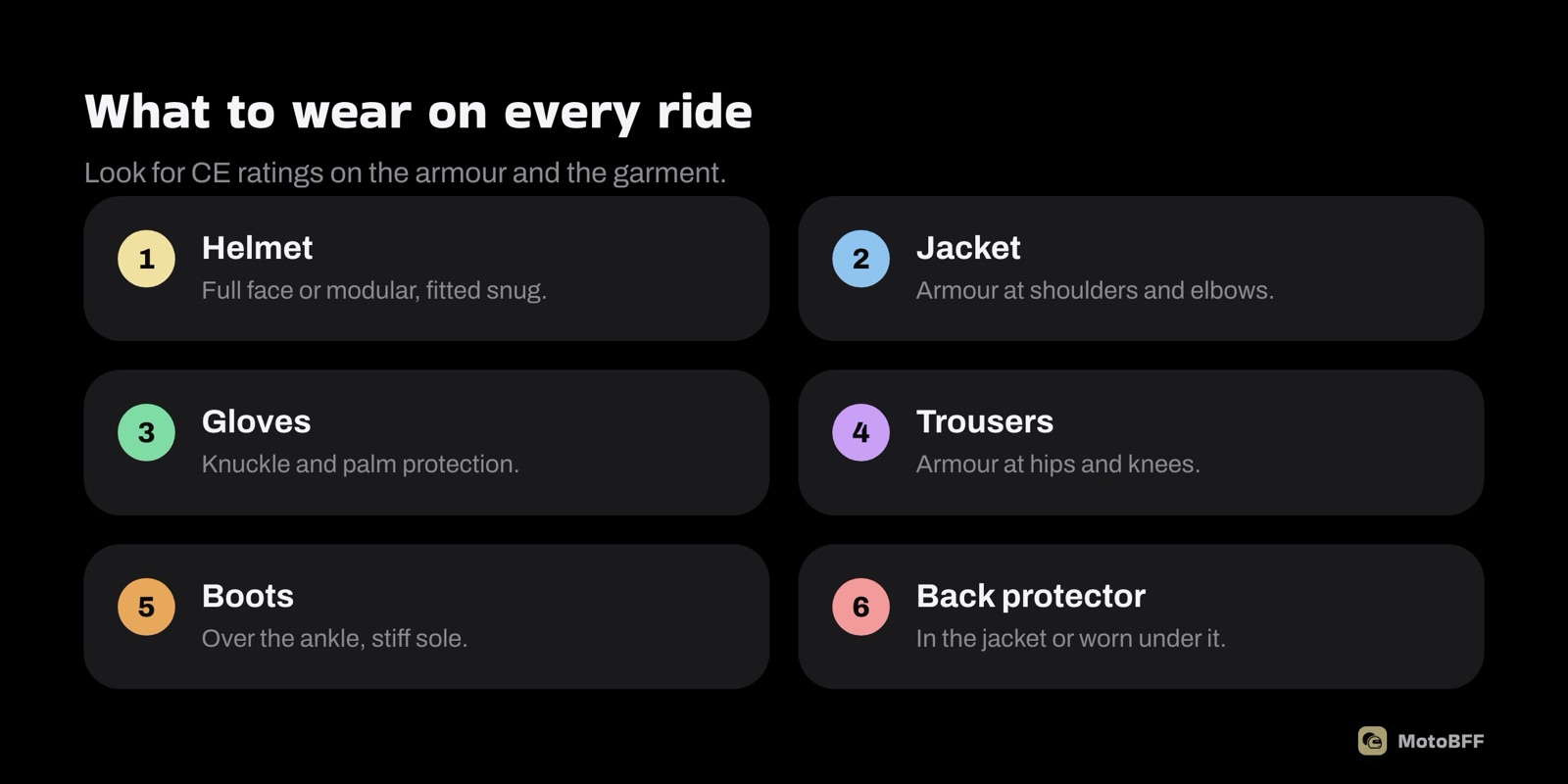
Protective gear has improved too. Look for certified helmets and armour, gear that fits the body you have now, and consider extras like airbag vests. Our motorcycle gear guide covers the basics.
Step 5: build up slowly
- Start on quiet, familiar roads in good weather and daylight.
- Keep the first rides short. An hour is plenty. Fatigue arrives sooner than you expect.
- Practise in an empty car park: slow turns, figure eights, braking.
- Do a pre-ride check every time, especially on a bike that's been stored.
- Ride your own pace, not the pace you remember.
Step 6: join a Beginner group ride
Once you're comfortable on your own, a Beginner group ride is the best next step. The pace is relaxed, there's a sweep at the back and nobody minds questions. You'll pick up current group riding habits and meet riders with similar experience. Plenty of returning riders choose Beginner rides for the first season even if they once rode fast.
On MotoBFF, group rides sit on a map with their meeting point, time, destination and riding level, so you can pick a Beginner ride near you and join with one tap. Our guide to beginner-friendly group rides explains what to expect.
Questions riders ask
Is it hard to get back into motorcycling after a long break?
The basics come back quickly, but judgement and smoothness take longer. A refresher lesson and a few short rides make the return much easier.
Should returning riders take a refresher course?
Yes. A qualified instructor can spot rusty habits and teach techniques that suit modern bikes. Many riding schools offer refresher lessons.
What bike should a returning rider buy?
A lighter, manageable bike with modern safety features like ABS. You can move up once your confidence and skills are back.
Can I join a group ride as a returning rider?
Yes. Start with a Beginner group ride, tell the host you're returning, and ride at your own pace.