
Motorcycle gear guide: what to wear and why
The short answer
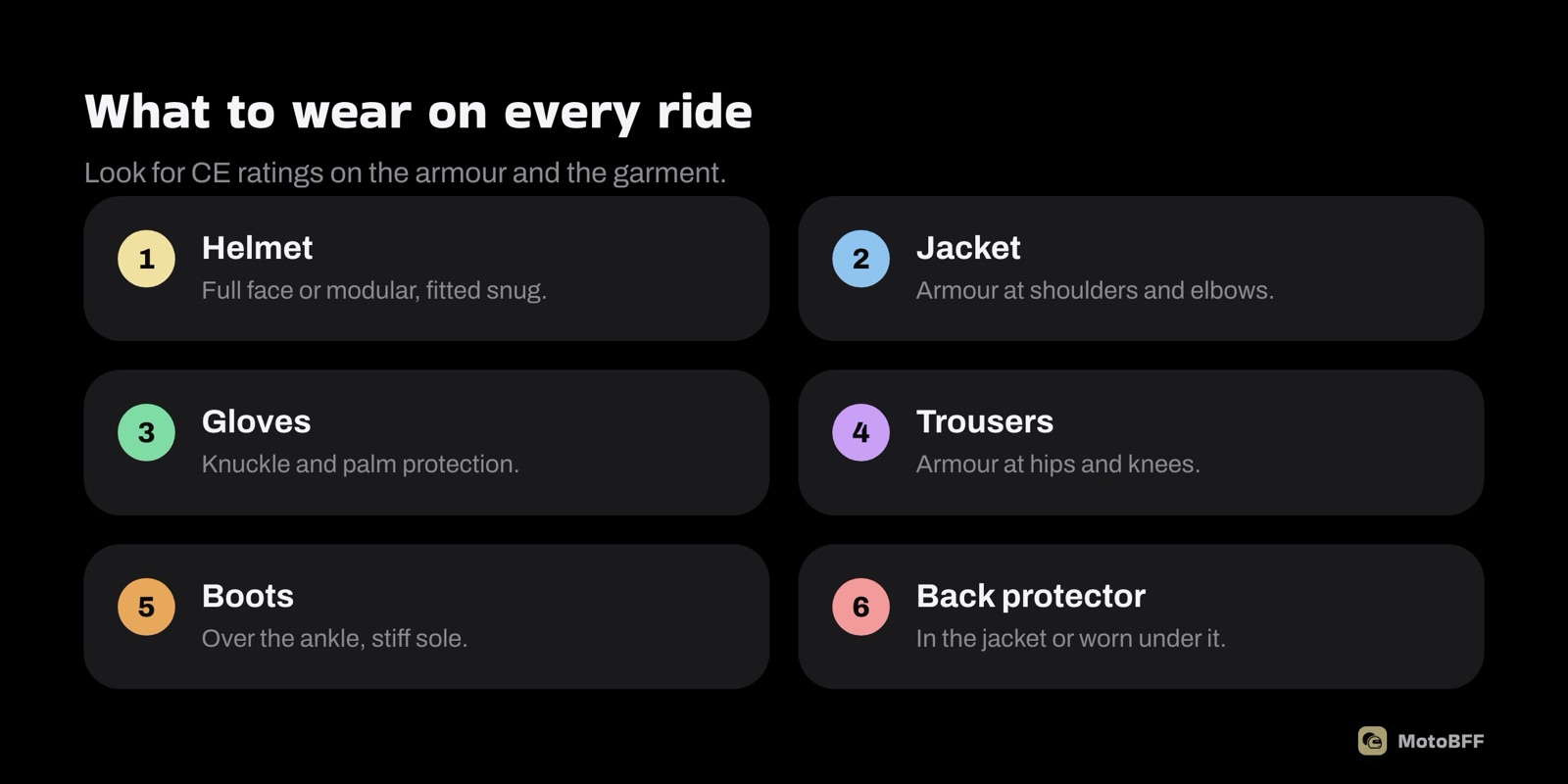
On a motorcycle, wear a certified helmet, a jacket and trousers with armour, gloves, boots that cover the ankle, and ideally a back protector. In Europe, look for the CE label on each item: it shows the gear passed a standard impact or abrasion test. Layer underneath so you can add or remove warmth as the weather changes.
Gear does two jobs. It protects you if you fall, and it keeps you comfortable enough to concentrate for a full day. A rider who is cold, wet or overheating makes more mistakes, so comfort is a safety feature too.
Helmet
The helmet is the one piece nobody rides without. A full-face helmet gives the most protection, because it covers your chin and jaw. Modular (flip-front) helmets are a good compromise for touring; open-face helmets leave your face exposed.
- Certification. In Europe, helmets must meet the UN ECE standard. Check for the label on the chin strap.
- Fit. Snug all round with no pressure points. It shouldn't rotate when you shake your head.
- Replace it after any real impact, even if it looks fine, and when the padding has worn loose.
Jacket and trousers
Riding jackets and trousers are tested for abrasion resistance, tear strength and seam strength. Under the European standard, finished garments carry a class from the highest to the lowest:
| Class | What it means |
|---|---|
| AAA | Highest protection, usually leather or heavy textile for sport and touring |
| AA | Strong protection, common in touring textile kit |
| A | Lighter protection, often urban or summer gear |
| B | Abrasion protection like class A, but without impact armour |
| C | An armour layer only, worn under or with other clothing |
Inside the jacket and trousers, armour sits at the shoulders, elbows, hips and knees. Armour is rated level 1 or level 2. Level 2 passes on less force in an impact, and it is often a little thicker.
Jacket and trousers should fit with armour in place while you're sitting on the bike in a riding position, not only when standing. A zip that joins the two stops the jacket riding up in a slide.
Gloves
Your hands go down first in almost every fall. Wear gloves with a CE label, protection over the knuckles and a palm slider or reinforced palm. Gauntlet gloves that go over the jacket cuff protect the wrist and keep wind out. Summer and winter pairs make a big difference in comfort.
Boots
Proper riding boots protect the ankle and the shin from crushing and twisting, and they have a stiff sole that resists bending. Look for the CE label, a firm heel cup and good grip on the sole. Trainers and fashion boots offer almost none of this.
Back protector
Many jackets have a pocket for a back protector, and many come with only foam in it. Replacing that foam with a CE level 1 or level 2 back protector is one of the cheapest upgrades in protection you can make. Airbag vests and jackets are another option, worn over or built into your gear.
Be seen
"I didn't see the motorcycle" is one of the most common things drivers say after a crash. Bright colours, reflective panels or a hi-vis vest help, especially in rain, at dusk and at night. A white or bright helmet stands out more than a black one.
Layering for the weather
The same jacket can work from spring to autumn if you layer well.
- Base layer. Thin, wicking fabric against your skin, such as merino or synthetic. Avoid cotton, which holds sweat and chills you.
- Mid layer. A fleece or a thermal liner for warmth. Many jackets have a removable one.
- Outer layer. Your armoured jacket and trousers, with a waterproof membrane or a rain oversuit on top.
Add a neck tube to stop draughts, and carry one more layer than you think you'll need. Mountain passes are cold even in summer. For hot days, see riding in the heat, and for wet ones, riding in the rain.
Before a group ride
Hosts and other riders notice gear. Turning up to a group ride in full gear is a quiet signal that you take riding seriously, and in MotoBFF it's worth checking the ride's destination and time so you pack the right layers for where you're going.
Questions riders ask
What is the minimum gear to wear on a motorcycle?
At minimum, a certified helmet, gloves, a riding jacket and trousers with armour, and boots that cover the ankle. A back protector adds important protection for little cost.
What does a CE rating on motorcycle gear mean?
A CE label means the gear has passed a European safety standard for impact or abrasion protection. Jackets and trousers are rated by class from AAA (highest) to C, and armour by level 1 or level 2.
Is level 1 or level 2 motorcycle armour better?
Level 2 armour passes on less force in an impact than level 1, so it offers more protection. Level 1 is often thinner and more comfortable.
How should I layer under motorcycle gear?
Use a thin wicking base layer, a warm mid layer such as fleece, and your armoured jacket and trousers on top with a waterproof layer. Avoid cotton, which holds sweat and makes you cold.