
Moto vlogging: how to film your rides safely and respect the people in them
The short answer
Mount cameras securely, set them up before you ride and never touch them while moving. Ask before you film the people you ride with, blur faces and number plates of strangers before you publish, and check your local rules on filming in public. The most important rule: ride the way you'd ride without a camera.
Motorcycle YouTube and Instagram have introduced a lot of people to riding. They also put other people on the internet, sometimes without asking. Good moto vloggers think about both.
Camera setup that doesn't distract you
Mount it properly. A camera that falls off at speed is a hazard for whoever is behind you. Use proper mounts, check them before every ride and add a tether where possible.
Helmet mounts: check first. Some helmet makers advise against sticking mounts to the shell, and rules on helmet cameras differ between countries. Chest mounts, chin mounts and bike mounts are alternatives.
Set everything up before you leave. Settings, framing, microphone and recording should be done at the meeting point, not at the first set of lights.
Wind noise is a camera problem, not a riding problem. Fix it with better mic placement and a foam cover, not by riding with your visor open on the motorway.
Don't ride for the camera
This is where moto vlogging goes wrong. Footage of wheelies on public roads, filtering at silly speeds and close passes gets views, and some riders start chasing them.
- Ride the same way you would without the camera. If you notice yourself riding differently, switch it off.
- Don't narrate through hard sections. Talking takes attention. Save the commentary for straights, stops or the edit.
- Your group didn't sign up for a shoot. Don't ask riders to do passes or poses on public roads during a ride. Our post on taking photos on rides covers safe ways to get shots of friends.
Privacy: faces and number plates
Your footage will be full of other people: riders in your group, drivers, pedestrians, people at the café.
Ask the people you ride with. Before the ride, say you're filming and ask if anyone would rather not appear. Some riders don't want employers, family or ex-partners knowing where they ride. Respect it without fuss.
Blur strangers. Faces and number plates of people who didn't agree to be in your video should be blurred before you publish. Most editing apps can track and blur automatically.
Check the law where you live. Rules on filming and publishing identifiable people differ by country. In the EU, publishing footage of identifiable people can fall under data protection law, and some countries treat number plates as personal data. When in doubt, blur.
Be careful with "bad driver" clips. Posting other road users' mistakes with their plate visible can lead to harassment. If you have dashcam evidence of dangerous driving, report it to the police rather than to your followers.
Don't reveal where people live. Cut the footage before you arrive at a friend's house, and don't show the start of your own rides if they begin at home.
Filming group rides
A few habits make filming a group ride easier for everyone:
- Tell the host in the ride chat that you'd like to film, and respect their answer.
- Mention it at the briefing, so riders can ask to stay out of shot.
- Keep your position in the formation. Don't drop back or pull alongside for an angle.
- Share the footage in the ride chat before posting publicly, so people can ask for cuts.
On MotoBFF, every ride has its own group chat, which makes steps one and four easy. The app follows the same privacy thinking: "Riders near you" shows a rough distance and the rider's country, never their location. Our guide to meeting new riders safely has more on keeping your details private.
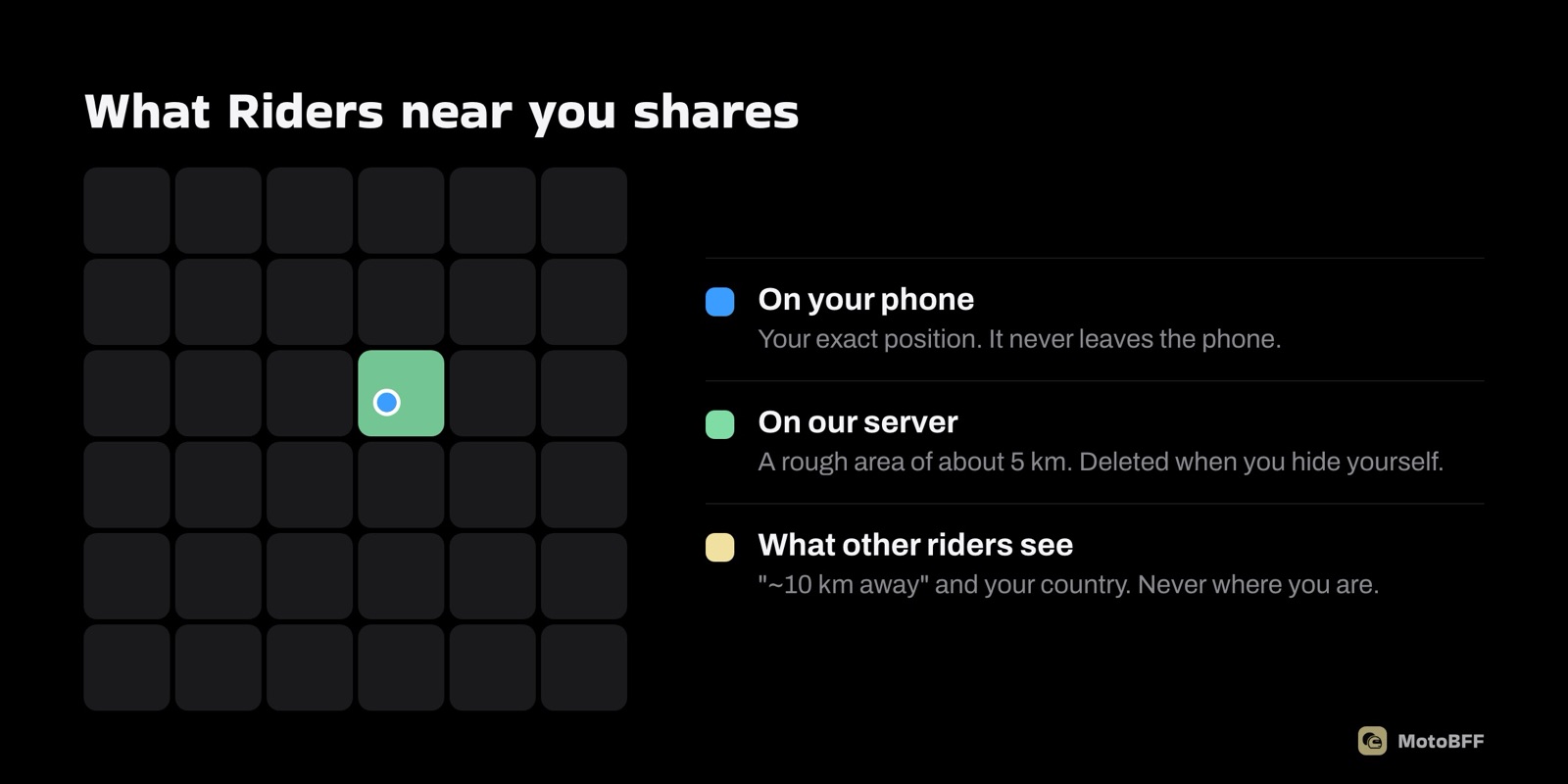
Photo accounts
The same rules apply. Ask before posting people, blur plates that aren't yours and don't geotag photos taken near someone's home.
Questions riders ask
Is it legal to use a helmet camera on a motorcycle?
It depends on the country. Some countries discourage or restrict helmet-mounted cameras, and some helmet makers advise against mounts on the shell. Check local rules and your helmet's guidance.
Do I need to blur number plates in motorcycle videos?
It's good practice to blur plates and faces of people who didn't agree to appear. In some countries, the law may also require it.
How do I film a group ride without annoying the group?
Ask the host first, mention it at the briefing, keep your place in the formation and share the footage with the group before posting.
What camera is best for moto vlogging?
Any action camera with good stabilisation and wind noise reduction works. The mount and your setup routine matter more than the brand.