
Mentoring new motorcycle riders: how experienced riders can help
The short answer
Experienced riders help new ones most by riding with them at the new rider's pace, sharing local knowledge and group riding habits, and building confidence without pressure. Mentoring is not instruction: technique, licensing and fixing riding faults belong with qualified, licensed trainers, and a good mentor points new riders to them.
Every rider remembers someone who helped them early on. A friend who rode behind them on their first long ride, a neighbour who showed them how to adjust a chain, the regular at the café who said "come along on Sunday, we go slow." That help is a big part of what makes the biker community work.
Mentoring is not instruction
This is the most important point, so it comes first.
Riding instructors are trained, assessed and, in most countries, licensed to teach. They know how to spot a fault, explain why it matters and correct it safely. A mentor, however experienced, usually isn't qualified to do that, and well-meant advice can be wrong, out of date or wrong for that rider.
| A mentor can | Leave to a qualified trainer |
|---|---|
| Ride with a new rider at their pace | Teaching cornering, braking or emergency technique |
| Share local roads, cafés and good routes | Correcting riding faults |
| Explain group ride habits and signals | Preparing for a licence test |
| Help with gear choices and basic bike checks | Assessing whether someone is safe to ride |
| Build confidence and invite them along | Advanced or track training |
If you see something worrying, the best help is to say so gently and suggest a lesson. "That last corner looked tense. A session with an instructor would sort it quicker than I could" is a good mentor sentence.
What good mentoring looks like
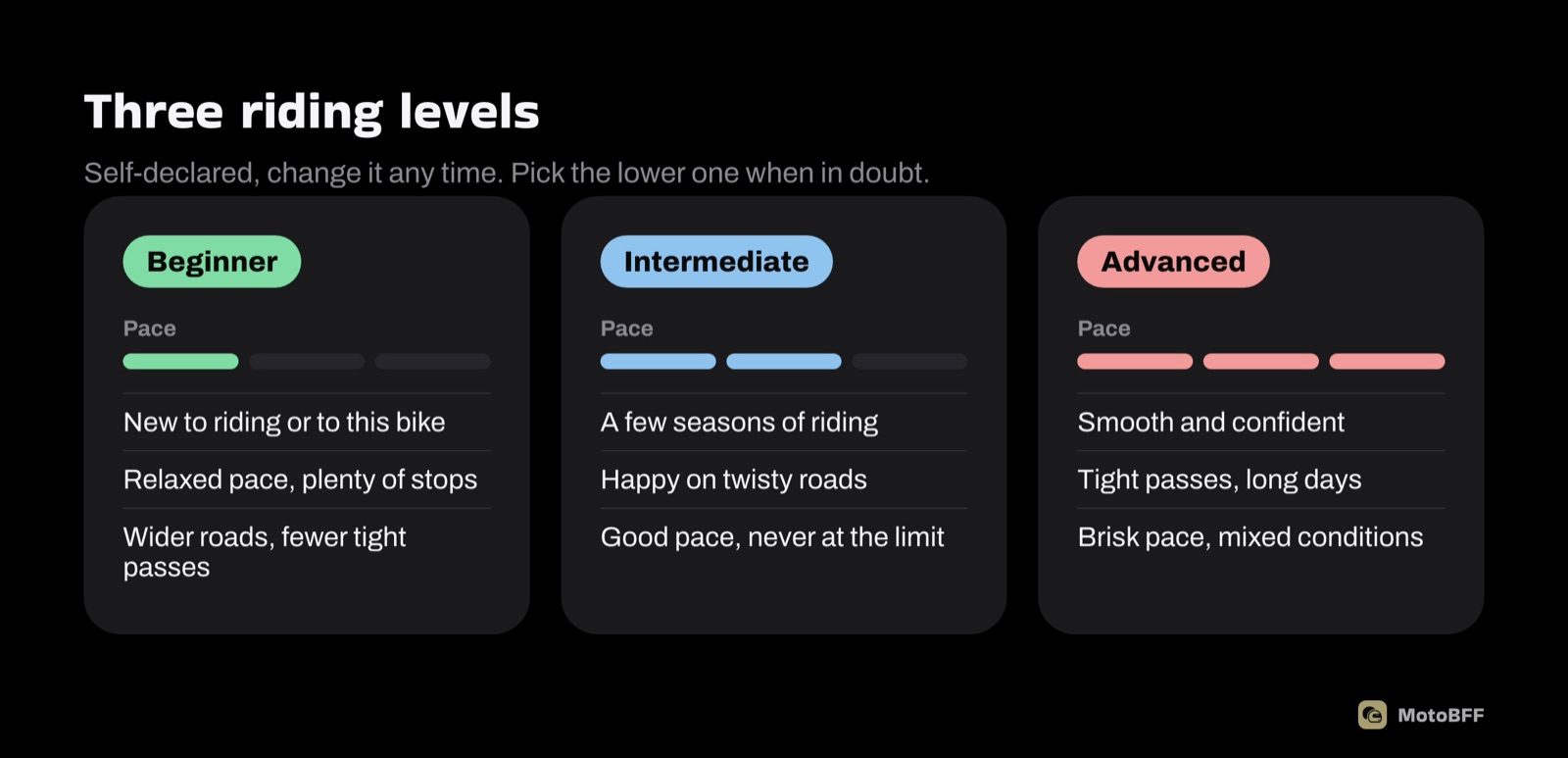
Ride at their pace. The new rider sets the speed. If you ride ahead, they'll try to keep up, and that's when mistakes happen. Many mentors prefer to ride behind and let the new rider lead on easy roads, or lead slowly and watch the mirrors.
Plan easy routes. Wide, well-surfaced roads, few hairpins, light traffic and frequent stops. Ride it yourself first if you can.
Stop often. Every 45 to 60 minutes on early rides. Ask how they're feeling, not how they're riding.
Share what isn't in the textbook. Which café welcomes bikes, where the gravel collects after rain, which fuel stop is open on Sundays, how to park a heavy bike on a slope.
Explain group riding before the first group ride. Staggered formation, the marker system, why you never overtake the sweep. Our guide to group ride etiquette is a good thing to send them.
Keep feedback for later, and keep it short. No critiques in the group chat, no lectures at the café. One positive observation and, if needed, one suggestion for a lesson.
Common mistakes mentors make
- Riding too fast "to show them the line". They'll follow your speed, not your line.
- Teaching technique. Especially countersteering, trail braking or emergency braking. Leave that to instructors.
- Pushing for bigger bikes or harder roads before they're ready.
- Overloading them with advice. One or two ideas per ride is plenty.
- Comparing them to other riders. Everyone learns at a different speed.
Encourage more training
Good mentors normalise training. Many experienced riders take refresher or advanced courses themselves, and saying so tells new riders that lessons aren't only for beginners. In the UK, for example, police-run BikeSafe workshops and advanced rider courses from organisations such as IAM RoadSmart are common next steps after the test. In other countries, ask riding schools and national motorcycling organisations what's available.
Mentoring through group rides
Hosting a Beginner group ride is one of the best ways to mentor several riders at once. Keep it short, pick an easy route, put new riders right behind the lead, and choose a patient sweep. See how to host a group ride and how to be a good sweep rider.
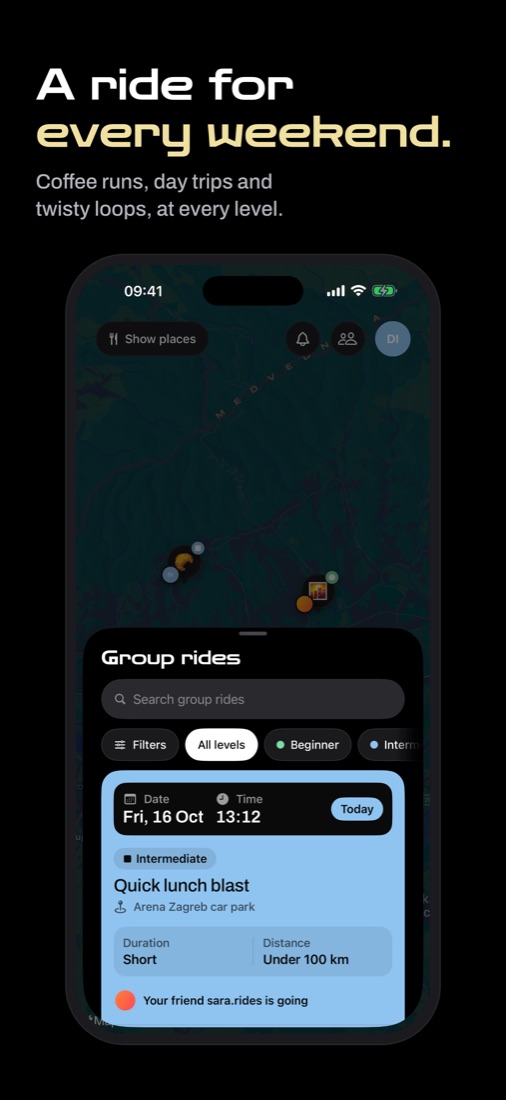
On MotoBFF, you can post a ride with the Beginner riding level, so new riders know what to expect. The ride's group chat opens with the meeting point, which gives you a place to answer questions before the day. Afterwards, add the riders you got on with as friends and message them about the next ride.
Questions riders ask
How can I help a new motorcycle rider?
Ride with them at their pace, plan easy routes with regular stops, explain group riding habits and encourage them to take professional training for technique.
Should experienced riders teach new riders how to ride?
No. Teaching technique is the job of qualified, licensed instructors. Mentors are most useful as riding companions and guides to local riding culture.
Should a new rider lead or follow an experienced rider?
Many mentors let the new rider lead on easy roads so they set their own pace. If the mentor leads, they should ride slowly and check their mirrors often.
Where can new riders get more training?
Riding schools, refresher and advanced courses, and road safety organisations. In the UK, BikeSafe and IAM RoadSmart are common options.