
Custom motorcycle culture: builders, shows, garages and the main styles
The short answer
Custom motorcycle culture is about changing a bike until it looks and feels like yours, from a few bolt-on parts to a full frame-up build. The main styles are bobbers, choppers, café racers and scramblers. You'll find the scene at custom shows like the Bike Shed Moto Show in London, Wheels and Waves in Biarritz and Glemseck 101 near Stuttgart, and in small garages and workshops everywhere.
Every rider customises something. A different seat, a smaller indicator, a louder (but legal) exhaust. Custom culture takes that urge further. The bike becomes a project, and the project becomes a reason to meet people.
The main styles
| Style | What it looks like | Roots |
|---|---|---|
| Bobber | Cut-down fenders, solo seat, low and stripped | American riders removing weight and parts, from the 1930s and especially after the war |
| Chopper | Long, raked-out front end, tall bars, stretched frame | American custom scene of the 1960s and 70s |
| Café racer | Low clip-on bars, rear-set pegs, humped seat, racing look | British rocker culture of the 1950s and 60s |
| Scrambler | High pipes, wide bars, dual purpose tyres | Early off-road racing on road bikes |
| Brat and tracker | Flat bench seats, wide bars, minimal bodywork | Street styles drawn from flat track and Japanese builders |
These aren't strict categories. Many builds mix ideas, and builders argue about the definitions over every coffee. That's part of the fun.
Builders and workshops
The custom scene runs from big name builders with long waiting lists to riders building one bike a decade in a shared garage. Between them are small workshops that do a bit of everything: welding, wiring, paint, upholstery.
A few things you'll notice:
- Donor bikes matter. Many custom builds start from older, simple bikes with air-cooled engines and easy-to-modify frames.
- Skills are shared. Ask a builder how they made something and you'll often get a full explanation.
- Legal matters. Changing frames, lights, exhausts and brakes can affect whether your bike is road legal. Rules differ by country, so check what needs an inspection or approval before you cut anything.
Custom shows and festivals
Custom shows are where the culture comes together. A few well known ones:
Bike Shed Moto Show, London. An annual indoor show at Tobacco Dock, usually in May, with hundreds of custom bikes, art and gear.
Wheels and Waves, Biarritz. A June festival in south west France that mixes custom bikes with surf, skate and art culture, with rides and races around the Basque Country.
Glemseck 101, near Stuttgart. A September weekend at Leonberg, near the old Solitude circuit, known for café racers, custom bikes and eighth-mile sprint races.
Born Free, California. A long running show focused on American custom and chopper culture.
Smaller local shows often feel friendlier. Look for custom nights at bike nights, open days at workshops and show-and-shine competitions at local rallies. Dates change each year, so check the official sites before planning a trip.
Getting into the garage scene
Start with your own bike. Small, reversible changes teach you the basics without risking the whole bike.
Find a shared workshop. Some cities have community garages or maker spaces where you can rent bench time and borrow tools.
Go to a show and talk to builders. Most builders love talking about their work. Ask about the hardest part of the build.
Join a build group. Online groups for your donor bike are full of people solving the same problems.
Ride it. A custom bike is still a bike. Ride it with friends and you'll find out what works.
Riding custom bikes in a group
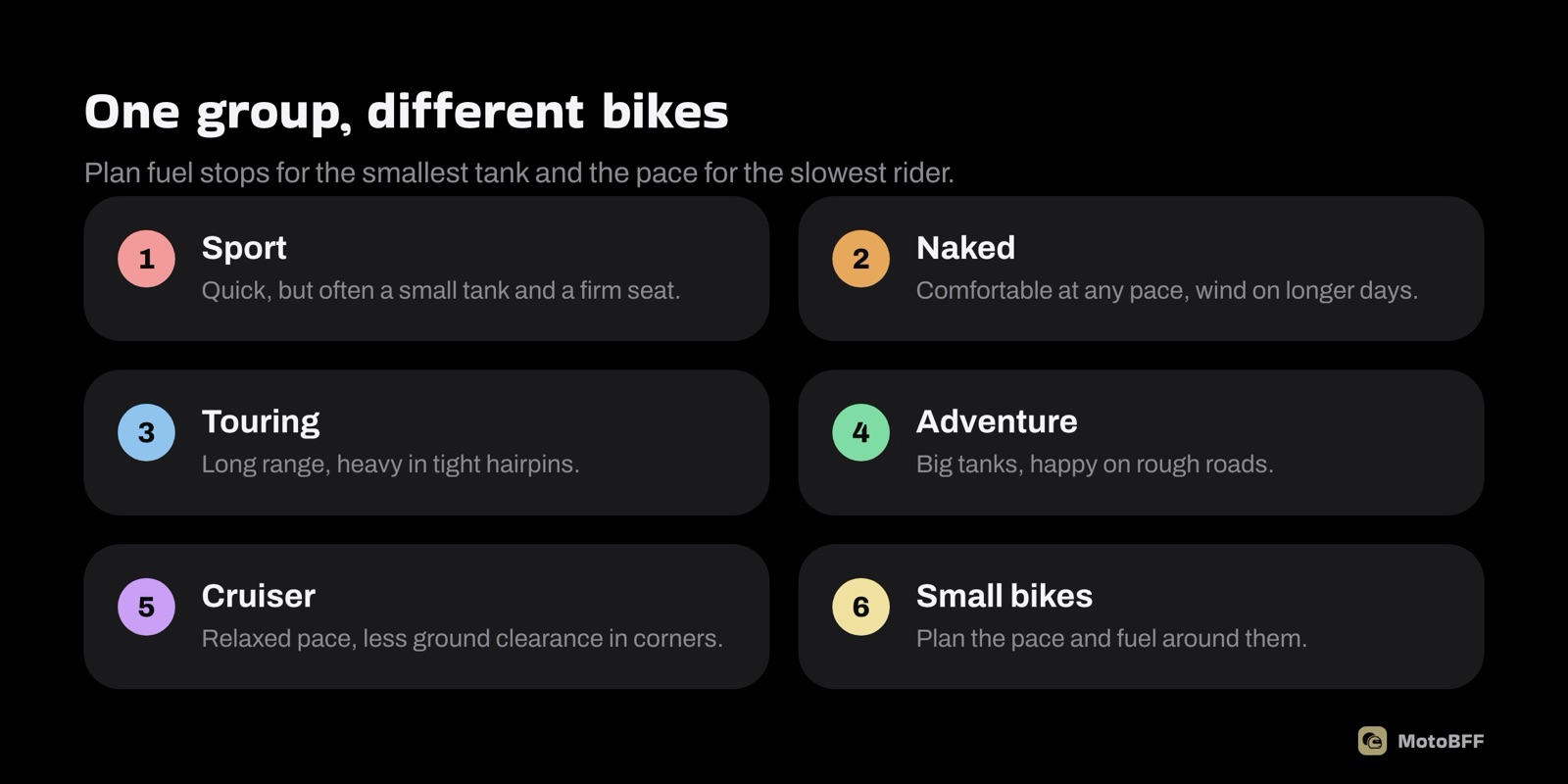
Custom bikes can be less practical than standard ones: smaller tanks, harder seats, less suspension travel and sometimes fewer lights. On a group ride, tell the host in the ride chat about your range and comfort, and choose rides with regular stops. Our post on group rides with different bikes covers how to keep a mixed group together.
If you want to find other custom riders, ask in your city chat on MotoBFF. A ride that ends at a café known for its bike scene is a classic way to show off a finished build. See our list of legendary motorcycle cafés for ideas.
Questions riders ask
What is the difference between a bobber and a chopper?
A bobber is cut down and stripped, with a low stance and short fenders. A chopper has a long, raked front end and often tall bars and a stretched frame.
What is the difference between a café racer and a scrambler?
A café racer is built for tarmac, with low bars and a racing position. A scrambler has high pipes, wide bars and dual purpose tyres for light off-road use.
Is a custom motorcycle road legal?
It can be, but changes to frames, brakes, lights and exhausts may need approval or inspection. Rules differ by country.
How do I start building a custom bike?
Start with small changes on your own bike, find a shared workshop or experienced builder, and choose a simple donor bike for a bigger project.