
What to do if someone crashes on a group ride
The short answer
If a rider crashes, first make the scene safe so nobody else gets hurt, then check whether the rider is responsive and breathing and call 112 in Europe or 911 in North America. Leave their helmet on unless they can't breathe, don't move them unless they're in danger, keep them warm and still, and stay with them until help arrives.
When someone goes down, a calm group that knows the steps makes a real difference. Read this before you need it.
This is general guidance, not medical training. Always follow the instructions of the emergency operator.
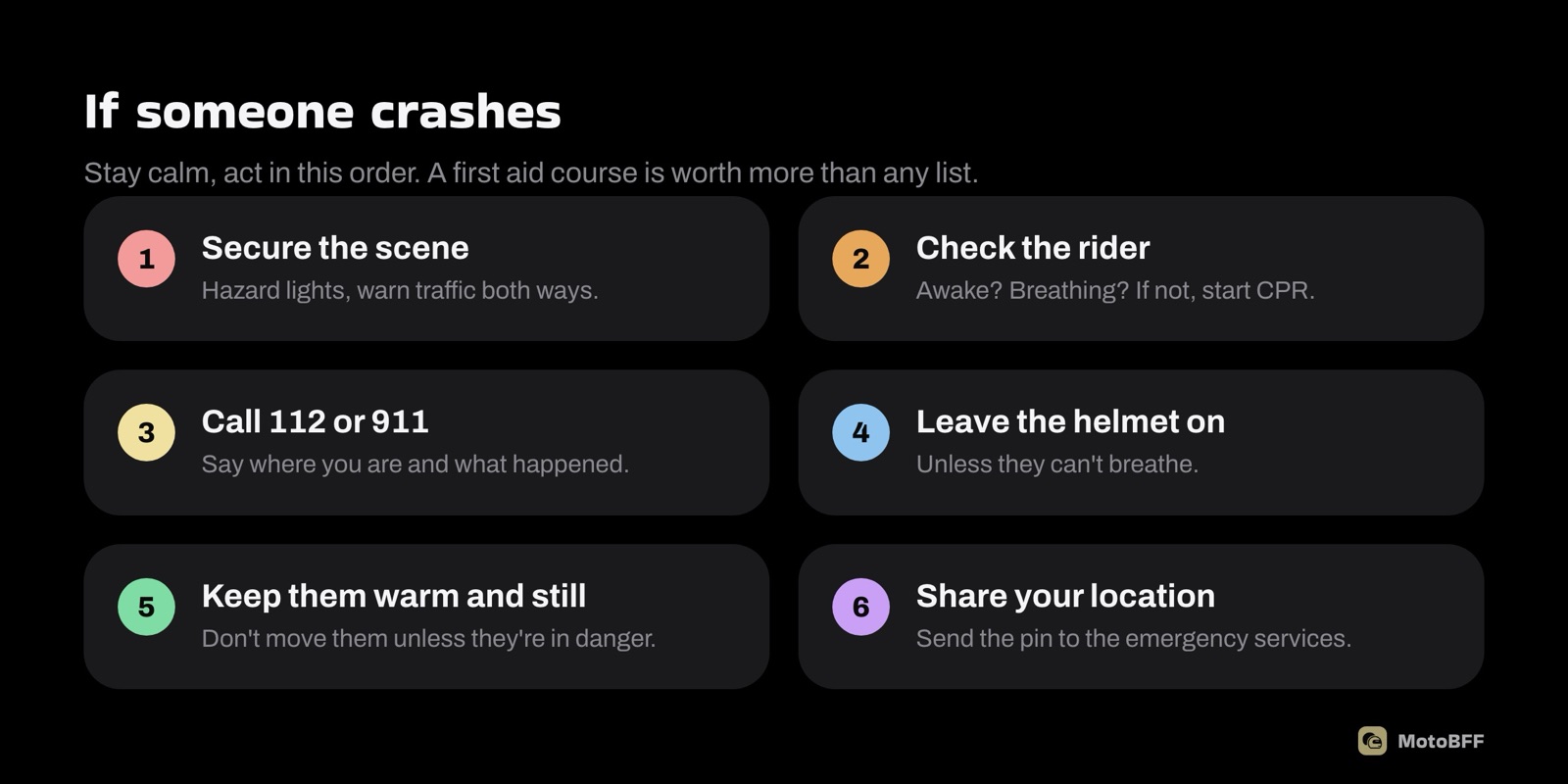
1. Secure the scene
Your first job is to stop a second accident.
- Stop safely, well off the road if you can, and switch on your hazard lights.
- Put on a high-visibility vest if you have one.
- Send riders back down the road to warn and slow traffic, especially before blind corners and crests. Use a warning triangle if anyone carries one.
If the scene isn't safe for you, don't go in. An injured helper can't help anyone.
2. Check the rider
Approach calmly and talk to them before you touch them.
- Are they responsive? Ask their name and whether they can hear you.
- Are they breathing? Watch the chest, listen and feel for breath.
- Is there heavy bleeding? Apply firm pressure with a clean cloth or dressing.
If they aren't breathing normally, call for help straight away and start CPR. The emergency operator can talk you through it, and chest compressions don't need the helmet off.
Tell them to stay still, even if they say they're fine. Adrenaline hides injuries.
3. Call 112 or 911
- 112 works across the European Union and in many other countries, from any mobile phone.
- 911 is the emergency number in the United States and Canada.
Put the phone on speaker and tell the operator:
- Where you are (road name, direction, nearest village or landmark).
- What happened: a motorcycle crash, how many people are hurt.
- The rider's condition: responsive or not, breathing or not, bleeding.
Stay on the line and follow their instructions. Call even if the rider says they're fine.
4. Leave the helmet on
Don't remove the helmet unless the rider can't breathe and you can't clear their airway any other way. Removing a helmet can make a neck or spine injury worse. Opening the visor or lifting a flip-front chin bar for air is usually enough.
If the helmet does have to come off, it takes two people: one keeps the head and neck still while the other removes it. A first aid course teaches this properly, and it's one of the best reasons to take one.
5. Keep them warm and still
- Don't move them unless they're in immediate danger, like traffic or fire.
- Keep them warm. Put a jacket or a foil blanket over them. Shock makes people cold quickly, even in summer.
- Don't give food or drink. They may need surgery.
- Keep talking and tell them help is coming.
6. Share your location
Emergency services need to find you, and riders who went ahead need to know what's happened.
- Read coordinates from your phone's map if the road name isn't clear.
- Send someone to meet the ambulance at the nearest junction if you're on a small road.
- Tell the rest of the group. In MotoBFF, the ride's group chat is the quickest way to tell everyone to stop at the next safe place and wait.
Who does what?
A group works best when one person coordinates.
| Role | Job |
|---|---|
| Coordinator (often the host) | Gives instructions, keeps people calm |
| Caller | Calls 112 or 911, stays on the line |
| With the rider | Talks to them, keeps them still and warm |
| Traffic | Warns and slows oncoming traffic |
| Messenger | Tells the group, meets the ambulance |
After the emergency
- Take photos of the scene for insurance, once it's safe.
- Exchange details with any other driver involved.
- Decide on the ride. Most groups end the ride. Nobody should ride on shaken up.
- Check in later with the rider and with whoever helped.
Take a first aid course
A first aid course is the most useful thing you can bring to a group ride. Some are made for riders and cover helmet removal. Ask your local Red Cross or a riding school.
Pack a small first aid kit and a foil blanket under the seat.
Questions riders ask
Should you take off a motorcyclist's helmet after a crash?
No, not unless the rider can't breathe and you can't open their airway any other way. Removing a helmet can worsen a neck or spine injury. If it must come off, one person keeps the head and neck still while another removes it.
What number do you call after a motorcycle crash?
Call 112 in Europe and many other countries, or 911 in the United States and Canada. Give your location, what happened and the rider's condition, then follow the operator's instructions.
Should you move a rider after a motorcycle crash?
Only if they're in immediate danger, such as from traffic or fire. Otherwise keep them still and warm and wait for emergency services.
What should the rest of the group do after a crash?
Make the scene safe by slowing traffic, have one person call emergency services, keep one person with the rider, and tell riders who went ahead to stop somewhere safe and wait.