
How to ride a motorcycle at night
The short answer
To ride a motorcycle safely at night, ride slow enough to stop within the distance your headlight shows, use a clean clear visor, and wear reflective gear so drivers can see you. Expect animals at dusk, look away from oncoming headlights towards the edge of the road, and stop when you get tired or cold.
Night riding can be beautiful: empty roads, cool air, town lights in the valley. It also takes away a lot of the information you rely on during the day. You see less, drivers see you less, and you're more tired than you think.
See: your lights and your visor
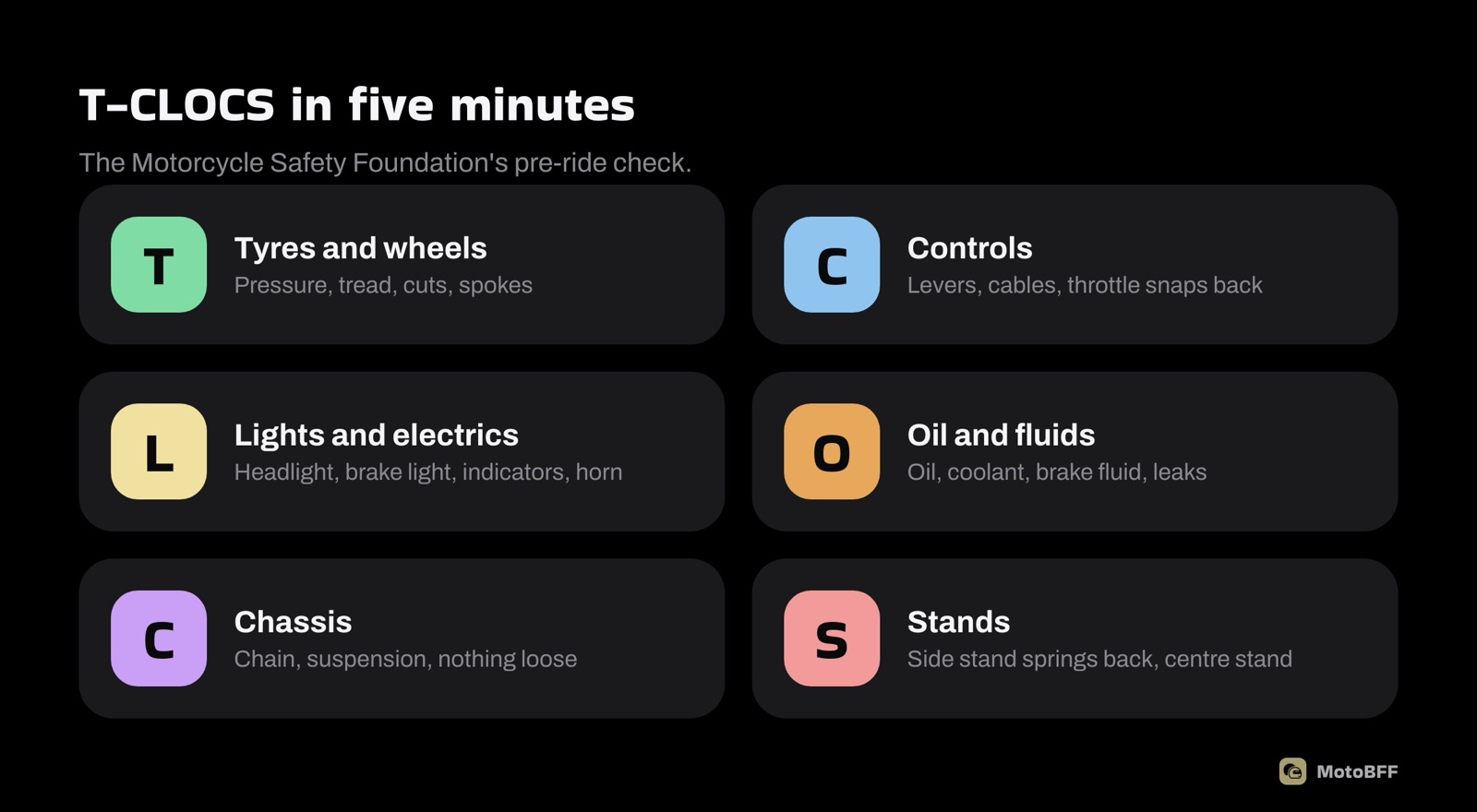
Check your lights before you leave. Low beam, high beam, brake light and indicators, as in the T-CLOCS check. A bulb that dies at 10 pm on a mountain road is a real problem.
Aim the headlight. If you carry a passenger or heavy luggage, the back of the bike sits lower and the beam points up. You see less and you dazzle oncoming drivers. Adjust the headlight or the rear preload for the load.
Clear, clean visor. A tinted visor or dark sunglasses have no place after sunset. Scratches that you never notice in daylight turn every oncoming headlight into a starburst. Clean the visor at every stop, and replace it when it's scratched.
Ride within your headlight
The simplest night rule: you should be able to stop within the distance you can see. On an unlit road with low beam, that's not far. Slow down, especially in corners, where your headlight points off the road rather than around the bend.
Use high beam whenever there's no one ahead or coming towards you, and dip it in good time for oncoming traffic and when you're following another vehicle.
Dealing with glare
When a car comes towards you with bright lights:
- Look away from its headlights, towards the edge line on your side of the road.
- Keep your speed steady or ease off slightly. Don't brake hard.
- Your eyes take a few seconds to recover after the car passes, so expect to see less for a moment.
The lights of a car ahead can help you read the road. Watch its tail lights rise, fall and swing to see where the road goes. Don't follow closely to do it.
Be seen
From the front, a single motorcycle headlight is easy to mistake for a distant car or to miss among other lights. From behind, you're one small tail light.
- Wear reflective panels on your jacket, helmet or a vest. Reflective material on parts that move, like arms and legs, catches the eye.
- Keep your lights clean. Road dirt dims them more than you'd think.
- Cover your brakes and position yourself so drivers at junctions see your headlight, not a gap.
Animals
Deer, wild boar, foxes and farm animals are most active around dusk and dawn, and many rural roads in Europe pass through their territory. Watch the verges for eyes reflecting your light. If you see one animal, expect others to follow. Brake firmly in a straight line rather than swerving.
Tiredness and cold
You get tired faster at night, and the temperature drops quickly after sunset, especially in the mountains. Both slow your reactions.
- Take an extra warm layer, even after a hot day.
- Stop more often than you would in daylight.
- If you catch yourself yawning or missing things, stop. Coffee helps for a short while. Rest helps properly.
Late at night there are also more tired drivers and drivers who have been drinking. Leave more space and expect mistakes.
Night group rides
Riding at night in a group needs more care, not less:
- Bigger gaps. It's harder to judge distance by tail lights.
- Smaller groups. Fewer riders are easier to keep together.
- Clear plan. The route, stops and fuel agreed before you leave, since hand signals are hard to see in the dark.
If you're planning a ride in MotoBFF that might finish after sunset, say so in the ride chat, so riders can bring the right visor and warm layers.
Questions riders ask
Is it safe to ride a motorcycle at night?
It can be, with more care. Ride slow enough to stop within the distance your headlight shows, use a clean clear visor, wear reflective gear and watch for animals at dusk and dawn.
How do I stop being dazzled by oncoming headlights on a motorcycle?
Look away from the oncoming lights, towards the edge line on your side of the road, and keep your speed steady. A clean, scratch-free visor reduces glare a lot.
Can I use a tinted visor at night?
No. A tinted visor cuts the little light you have at night and makes hazards much harder to see. Use a clear visor after sunset.
What should I wear to be seen on a motorcycle at night?
Wear reflective panels or a reflective vest, ideally with reflective material on your arms and legs as well. Movement catches a driver's eye, so reflectors on moving parts help most.